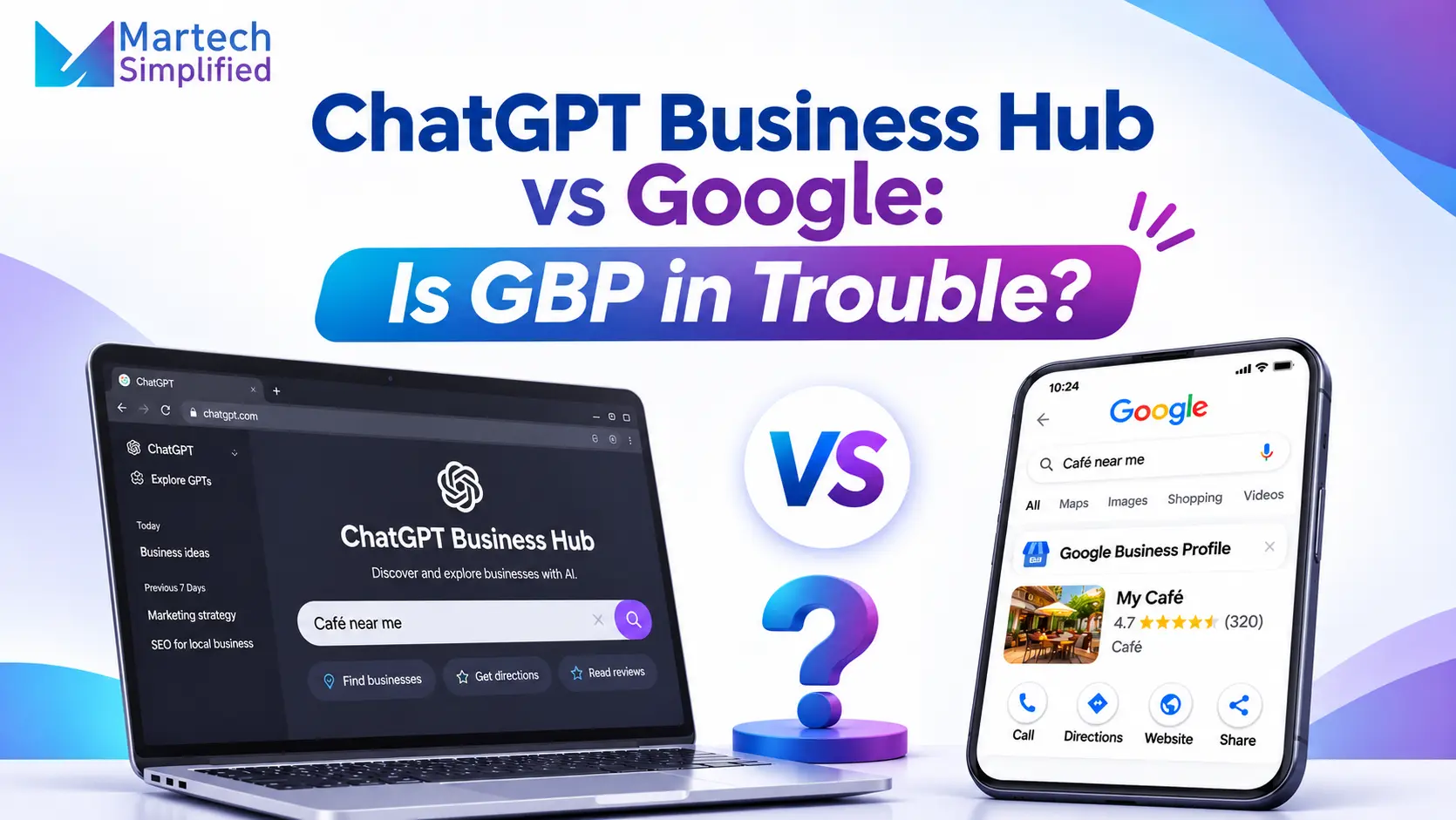





The digital search landscape is experiencing a major transformation as artificial intelligence becomes an important part of how people access online information. Users are no longer depending exclusively on Google searches to research products, compare services, or evaluate businesses. Many now turn to platforms such as ChatGPT, Google Gemini, and Perplexity to receive personalised answers and relevant recommendations. This change has introduced a new area of digital marketing known as GEO (Generative Engine Optimisation).
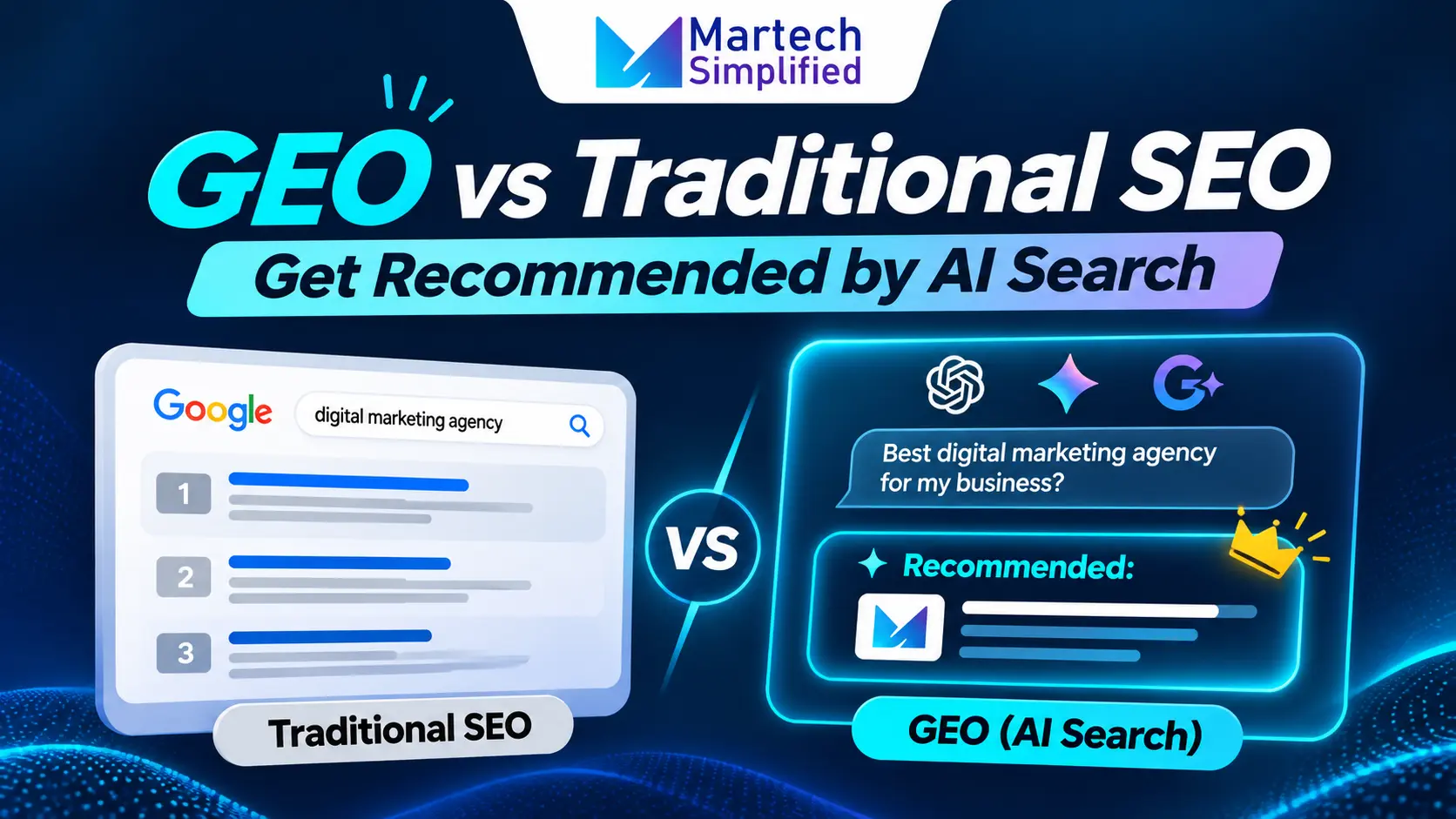
Traditional SEO has primarily concentrated on helping websites achieve better positions in search engine results. In comparison, GEO (Generative Engine Optimisation) focuses on preparing a brand’s digital content so that AI-powered platforms can identify relevant information and potentially include it in their generated responses.
For businesses, this development creates a need to rethink how online visibility is achieved. Ranking on Google remains valuable, but being referenced by AI-powered platforms can provide another opportunity to reach potential customers. Combining both approaches can help businesses maintain visibility as consumer search habits continue to evolve.
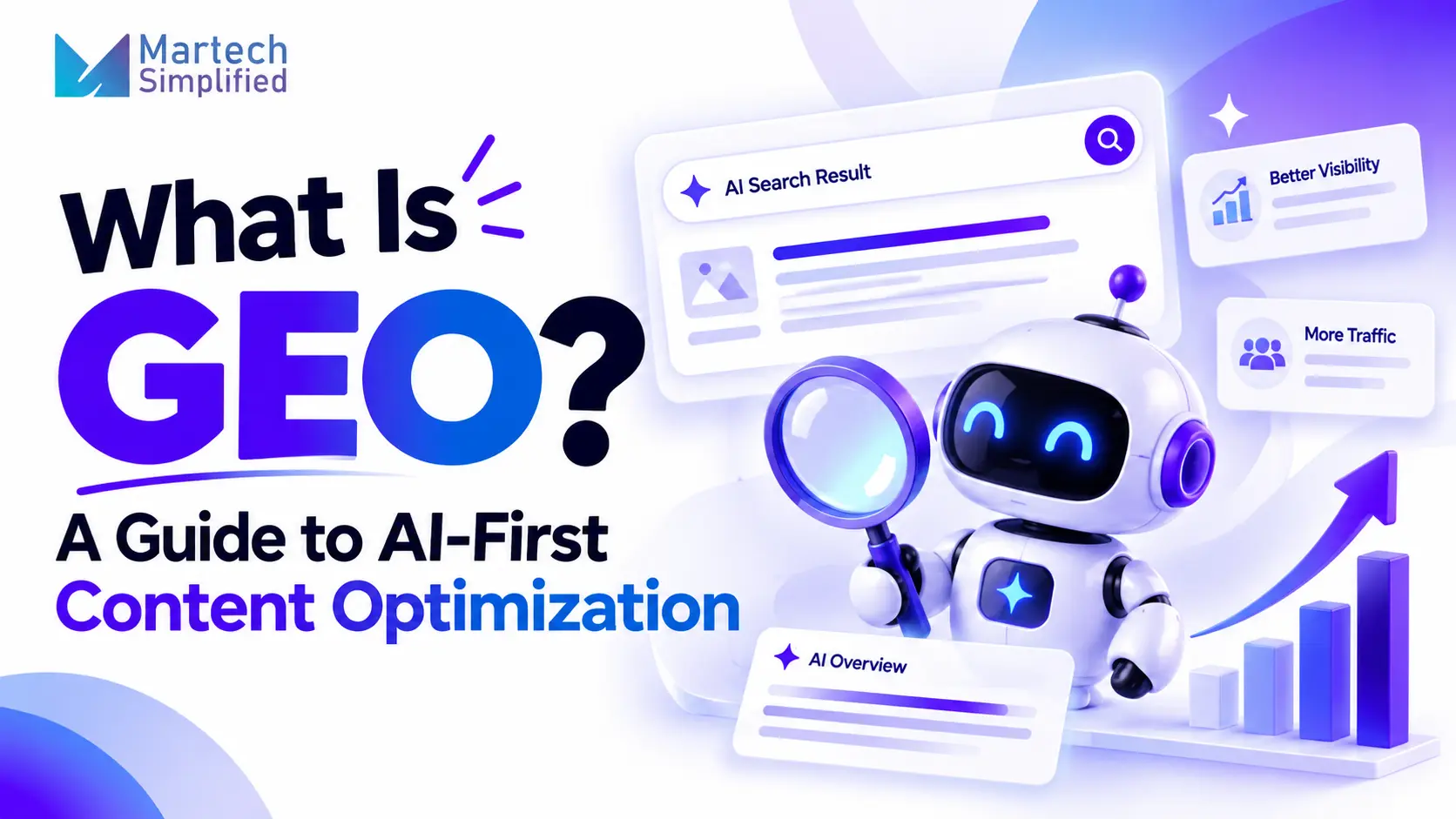
GEO (Generative Engine Optimisation) refers to the process of improving a website’s content, credibility, and accessibility to increase its potential visibility across generative AI platforms.
Unlike conventional search engines, which generally display a collection of webpages for users to explore, AI-powered platforms can process information from different sources and generate a consolidated response. Depending on the platform and search experience, users may also receive citations, website links, and business recommendations.
Consider someone asking an AI platform, “Which digital marketing company can help a small business improve its online presence?” Instead of displaying only a list of websites, the platform may retrieve relevant information and present selected businesses with supporting details.
An effective GEO strategy aims to make a business’s information relevant, reliable, and accessible to these systems. This involves publishing informative content, maintaining accurate brand details, demonstrating industry knowledge, and ensuring that website pages can be accessed by relevant crawlers.
However, AI visibility cannot be guaranteed through any single optimisation technique. The information presented can vary according to the user’s question, the platform’s retrieval process, and the sources available at that time.
Traditional Search Engine Optimisation (SEO) involves improving a website’s ability to appear prominently in unpaid search engine results. Its purpose is to connect relevant webpages with people searching for particular products, services, or information.
A comprehensive SEO approach includes keyword research, content development, website architecture, technical improvements, backlink acquisition, and user experience optimisation.
For instance, a digital marketing company targeting digital marketing agency in Mumbai may create location-specific landing pages, publish industry-related articles, optimise its Google Business Profile, and develop relevant backlinks. These activities help search engines evaluate the website’s relevance and authority for related searches.
Traditional SEO also involves improving page loading performance, mobile usability, internal navigation, and content organisation. These elements help search engines crawl website pages and provide visitors with a better browsing experience.
Although AI-powered discovery is becoming more prominent, traditional SEO continues to play an important role in digital marketing. Search visibility, organic website traffic, and relevant content remain valuable components of an effective online growth strategy.
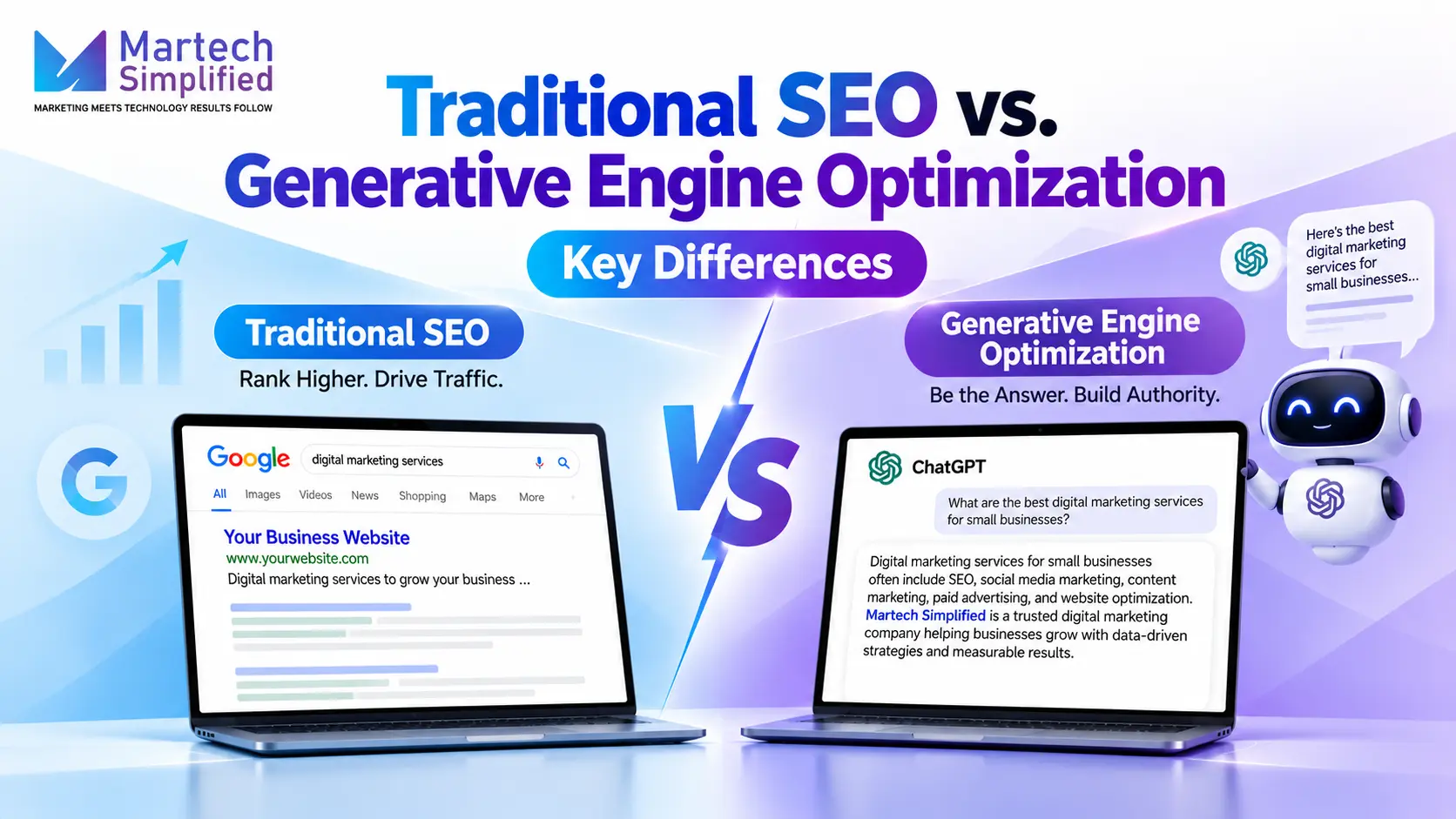
The main distinction between GEO (Generative Engine Optimisation) and traditional SEO lies in how businesses aim to gain visibility.
Traditional SEO is primarily concerned with improving the position of individual webpages within search engine results. GEO focuses on increasing the likelihood that a brand or its published information will be considered as a relevant source in AI-generated responses.
The user experience also differs. In traditional search, people generally enter keywords, compare available results, and visit different websites before making decisions. Generative AI platforms allow users to ask conversational questions and receive combined answers without manually reviewing every available webpage.
The optimisation priorities are also slightly different. Traditional SEO gives significant attention to keyword relevance, backlinks, technical performance, and organic rankings. GEO places additional importance on clearly presented information, contextual relevance, factual accuracy, reliable references, and consistent brand information.
Performance evaluation follows different indicators as well. SEO results are commonly assessed through organic impressions, clicks, keyword positions, and conversions. GEO measurement can include AI-generated brand mentions, website citations, referral traffic, and visibility across relevant conversational queries.
Both approaches serve different but connected purposes. Businesses should use them together to create a stronger digital presence rather than treating one as a replacement for the other.
Different AI platforms use different methods to retrieve and present information. Knowing how these systems operate can help businesses develop more effective GEO (Generative Engine Optimisation) practices.
ChatGPT can generate responses using its trained knowledge and, when its search functionality is used, information retrieved from online sources. Depending on the query, its responses may contain references and links to supporting webpages.
Businesses aiming for visibility should ensure that their important website content is accessible to OpenAI’s OAI-Searchbot. Website security configurations, robots.txt instructions, and server settings should be checked to identify anything that could prevent legitimate crawling.
Publishing well-researched articles, maintaining detailed service pages, and presenting accurate company information can improve the usefulness of a website as an information source. Nevertheless, crawler access alone does not guarantee that a business will appear in ChatGPT recommendations.
Google Gemini is part of Google’s AI ecosystem and can use information from Google’s search capabilities and other connected services, depending on the product experience.
Businesses should maintain their website’s search accessibility, publish relevant information, and follow established Google Search quality practices. Accurate business details, useful service descriptions, and a well-organised website can contribute to a more reliable online presence.
Maintaining traditional SEO standards is particularly important because Google’s AI-powered search experiences operate alongside its broader search infrastructure.
Perplexity functions as an AI-powered answer engine that retrieves online information and presents responses with supporting source links.
This creates opportunities for businesses whose webpages provide relevant information about specific industry questions. Articles containing original insights, meaningful statistics, practical examples, and properly attributed references can offer useful material for these platforms.
Website owners should also examine whether technical restrictions are preventing relevant pages from being crawled. Maintaining accessible and regularly updated information can support the website’s overall discoverability.
Improving visibility across AI platforms requires a broader approach than simply adding more keywords to existing website pages. An effective GEO (Generative Engine Optimisation) plan should combine useful content, technical improvements, brand reputation, and reliable information.
People using AI search platforms frequently ask complete questions instead of entering short search phrases. Businesses should therefore create content around the actual questions and challenges their potential customers have.
For example, a digital marketing website can publish detailed articles covering SEO pricing, website development, local search optimisation, social media marketing, and online advertising strategies.
Each article should provide meaningful information rather than repeating general statements. Organising content through relevant H2 and H3 headings, answering questions directly, and including practical examples can improve readability and make individual topics easier to interpret.
A question-focused content strategy can support both traditional organic search and **GEO** by providing useful information for different types of search experiences.
A business’s credibility plays an important role in building a dependable online presence. Google’s E-E-A-T framework refers to Experience, Expertise, Authoritativeness, and Trustworthiness, which are important considerations when evaluating content quality.
Companies should clearly communicate their background, services, industry experience, and professional capabilities. Author information, genuine customer feedback, detailed case studies, and verifiable business information can help visitors assess the reliability of a brand.
Businesses can also strengthen their reputation by contributing meaningful insights to relevant publications and professional communities. Genuine industry recognition is more valuable than artificial mentions created purely to influence search visibility.
A technically sound website provides a strong foundation for traditional SEO as well as AI-driven discovery.
Website owners should regularly examine their robots.txt file, XML sitemap, indexing directives, canonical URLs, and server responses. These elements help identify whether important pages can be accessed and processed by relevant search crawlers.
The website should also offer mobile-friendly navigation, secure connections, logical internal linking, and an efficient page-loading experience.
For ChatGPT-related search visibility, businesses should review access for OAI-Searchbot. Similarly, Googlebot should be able to access important pages intended for Google Search indexing.
These technical improvements help ensure that valuable website information is available to the systems responsible for discovering and retrieving online content.
Structured data provides additional context about the information presented on a webpage. It uses a standardised format to describe elements such as an organisation, article, product, or local business.
Depending on the content available, businesses may implement relevant Schema.org markup, including Organization, LocalBusiness, Article, and Product schemas.
For example, organisation markup can communicate information about a company, while article markup can identify the author, headline, and publication details of a blog post.
All structured data should accurately reflect the information visible to website visitors. Adding irrelevant or misleading markup can create quality issues rather than improve search performance.
Structured data supports search engines in interpreting webpage information, but it should not be considered a direct guarantee of AI citations or recommendations.
A business’s digital reputation is not limited to its official website. Information published across relevant industry websites, business directories, professional networks, and review platforms can contribute to its wider online identity.
Companies should maintain consistent business details and provide accurate service information wherever their brand is represented.
Publishing original industry research, sharing campaign results, participating in professional discussions, and contributing informative articles can help establish a recognisable brand presence.
For example, a digital marketing agency can publish real campaign case studies and share practical observations about changing marketing trends. These activities demonstrate industry involvement and provide additional useful information about the company.
The purpose of GEO (Generative Engine Optimisation) is to establish a trustworthy digital identity, not to generate large numbers of unrelated brand mentions.
Information that was accurate when originally published may become outdated as services, pricing, technology, and industry practices change.
Businesses should periodically evaluate their important website pages and identify sections that require corrections or additional information. Service descriptions, blog articles, statistics, contact details, and pricing information should reflect the latest available facts.
Content updates should provide genuine value instead of making minor changes simply to display a recent modification date.
Adding relevant examples, replacing outdated statistics, and including reliable references can improve the usefulness of existing resources. Maintaining accurate content also helps visitors receive dependable information when researching a business.
Evaluating GEO (Generative Engine Optimisation) requires businesses to monitor visibility across AI-powered platforms in addition to conventional search performance.
One practical method is to prepare a list of questions that potential customers might ask about the company’s products or services. These questions can be tested periodically on ChatGPT, Gemini, and Perplexity to check whether the business is mentioned or its website is cited.
Companies should record how frequently their brand appears, which webpages are referenced, whether the information is accurate, and which competitors receive visibility for similar queries.
Referral traffic from identifiable AI platforms can also be examined through Google Analytics 4. This provides additional information about visitors arriving from AI-powered sources.
Traditional SEO reporting should continue through Google Search Console and website analytics. Important metrics include organic impressions, search clicks, average keyword positions, landing-page engagement, and conversions.
Reviewing these indicators together provides a broader picture of digital visibility and helps businesses identify opportunities to improve their search marketing strategies.
One mistake businesses frequently make is treating AI search optimisation as another keyword-placement exercise. Repeating the same phrase excessively does not automatically make a webpage more relevant to an AI-generated answer.
Publishing large quantities of generic content without adding meaningful information is another concern. Articles should provide original value, contain accurate information, and address the intended audience’s requirements.
Some businesses also focus heavily on collecting brand mentions without considering the quality or relevance of the sources. Unrelated directories, artificial reviews, and misleading promotional claims can damage brand credibility.
Another issue is assuming that a specific technical technique can guarantee recommendations from ChatGPT, Gemini, or Perplexity. No single setting, schema type, or content format guarantees inclusion in AI responses.
A sustainable GEO strategy should focus on genuine brand authority, useful website information, technical accessibility, and consistent content quality.
AI-powered search is creating new ways for consumers to research businesses, compare solutions, and make informed decisions. As these platforms become a regular part of online discovery, companies need to consider how their digital information is presented across different search environments.
GEO (Generative Engine Optimisation) adds another dimension to traditional SEO by focusing on how brands and their content can become relevant sources for AI-generated responses. However, strong search fundamentals continue to matter, making a combined strategy the practical approach for long-term visibility.
Businesses should concentrate on developing useful content, improving website accessibility, maintaining accurate information, and establishing a credible presence across relevant digital platforms.
At Martech Simplified, integrating traditional SEO with modern AI search optimisation practices can help businesses adapt to changing search behaviour and create more opportunities for online brand visibility.
Traditional SEO aims to improve a website’s position in organic search engine results. GEO focuses on increasing the possibility of a business or its content being referenced in AI-generated responses from platforms such as ChatGPT, Gemini, and Perplexity.
Make important website pages accessible to relevant crawlers, publish accurate and informative content, maintain consistent business information, and build a credible online reputation. These practices support discoverability but do not guarantee recommendations.
GEO is not a complete substitute for traditional SEO. Both approaches address different aspects of online visibility. Technical optimisation, quality content, website accessibility, and brand authority remain important across search platforms.
There is no standard timeframe for improving GEO visibility. Results depend on website accessibility, content relevance, brand recognition, competition, and the retrieval methods used by individual AI platforms. Regular monitoring is necessary to evaluate progress.
Schema markup can help search engines interpret information about a webpage, organisation, or product. However, it does not guarantee that AI platforms will cite a website. Accurate structured data should support, rather than replace, high-quality content and technical SEO.
Yes. Small businesses can work on AI search visibility by creating industry-specific resources, maintaining accurate local business profiles, collecting genuine customer reviews, and publishing helpful information about their services. These practices can strengthen their digital presence and improve opportunities to appear in relevant searches.
The growing use of AI-powered search is changing how people discover businesses, evaluate services, and make purchasing decisions. While traditional SEO remains essential for organic search rankings, GEO (Generative Engine Optimisation) creates additional opportunities for brands to appear in AI-generated recommendations and search responses.
Businesses should adopt a combined strategy that focuses on high-quality content, technical website optimisation, brand credibility, and accurate online information. By strengthening both traditional SEO and GEO practices, companies can improve their digital presence, reach relevant audiences, and stay competitive in an evolving search environment.
At Martech Simplified, combining traditional SEO with AI search optimisation can help businesses build sustainable online visibility and prepare for the future of digital discovery.
Enhance online presence for your small business or startup with Martech Simplified: Your Trusted Digital Marketing Agency in Navi Mumbai, which offers you customized digital marketing strategies for online growth.
© 2026 Martech Simplified pvt ltd All Rights Reserved